

I recently came across an article from the National Council on Aging titled “The Many Gifts of Gratitude and Its Role in Aging Well.” Naturally, anything connecting gratitude and aging catches my attention these days.
One idea stood out the most: gratitude encourages us to focus on what is, rather than what is missing. The article describes gratitude and mindfulness as important dimensions of aging well.
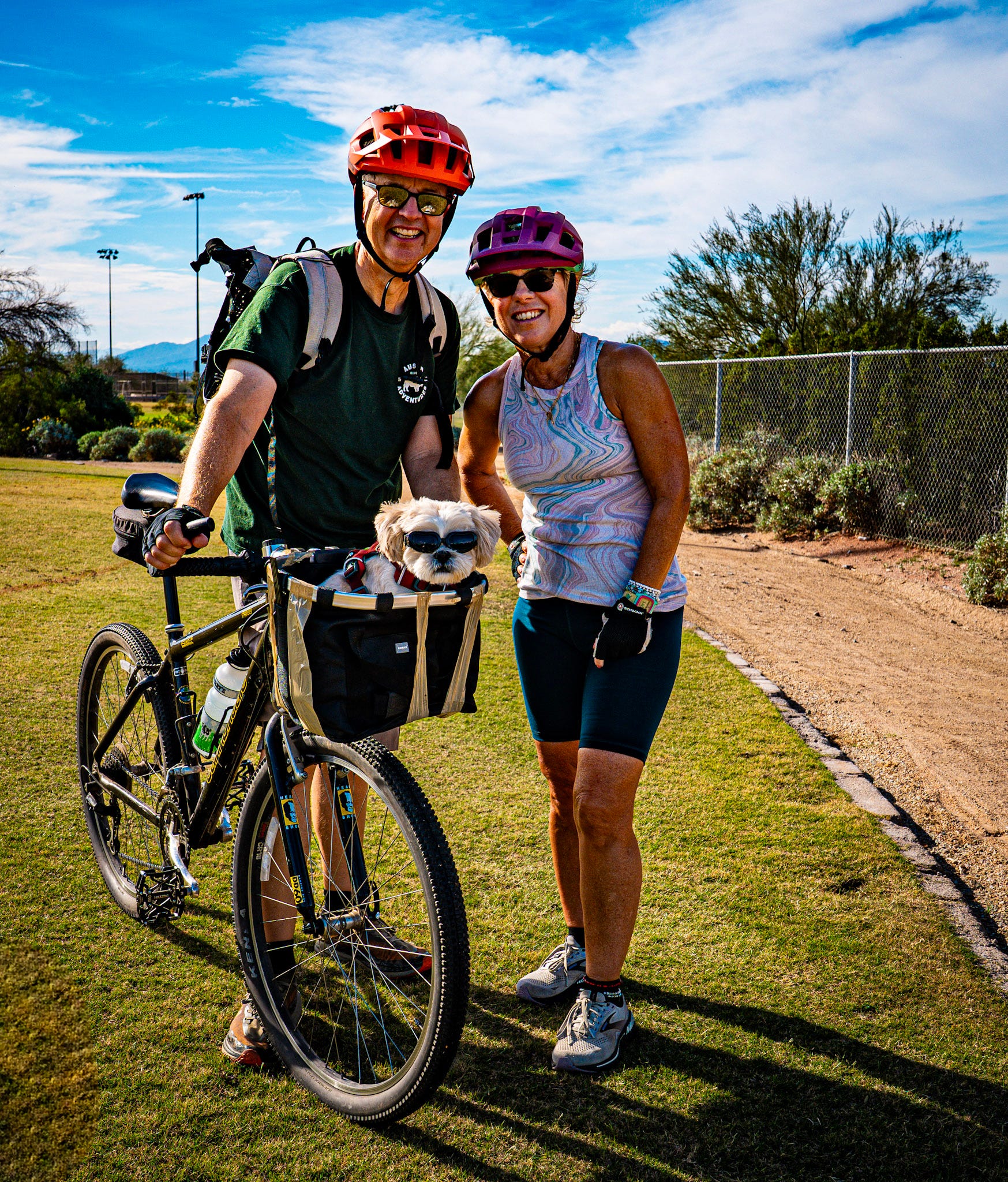
The reason I’m sharing my experience with you is to demonstrate that I’m learning as I go and just beginning to plan the rest of my life, one day at a time. For example, I’m trying new things like launching this newsletter, pedaling my bicycle around the area to look for interesting people with dogs, and asking if I can take their picture.
Yes, I have much for which to be grateful. Yet I’m not the only aging person who finds that easier said than done once retirement starts to appear on the horizon. There are millions of us, and I’m at the tail end of the Boomer Generation, which boomed from 1946 to 1964.
Being intentional about what is next matters.
For most of my adult life, my family and entrepreneurial work supplied plenty of stimulation. There were problems to solve, people to help, businesses to build, things to learn, and deadlines to meet. Family gave life meaning beyond work. Staying physically healthy gave me another responsibility.
But what happens when work becomes optional? After all, my conscious choice decades ago was to live to work, not work to live. My work was powered by purpose and meaning — being of service to others.
If you owned a time bank, how would you invest your time? You wouldn’t work for money — something bigger would draw you in. That question has been on my mind because I have no desire to retire from being curious, keeping my mind active, and keeping my body limber enough to put my boxer shorts and socks on without falling on my head.
I love to write. I want to keep improving my photography. I want to become a better watercolor painter. I want to mentor younger people and share some of what six decades of mistakes, successes, losses, and surprises have taught me.
At the same time, I don’t need to become what researchers call a “SuperAger,” someone whose memory remains unusually strong into advanced age. And I certainly don’t need to break a longevity record, which is why I haven’t bothered to buy or read Super Agers: An Evidence-Based Approach to Longevity.
I’m more into cooperation than competition for superaging. I’d like my mind and body to remain useful for as long as I’m here. It turns out that research gives me good reasons to keep doing exactly these things.
The National Institute on Aging reports that staying mentally engaged may support cognitive health. One particularly interesting study found that older adults who learned digital photography or quilting experienced greater memory improvement than those who primarily socialized or engaged in less cognitively demanding activities. Research into creative writing, music, theater, and dance has also shown promising benefits for memory, self-esteem, stress, and social connection. However, researchers caution that the evidence is not strong enough to claim these activities prevent cognitive decline.
That’s a huge distinction. Painting isn’t medicine. Photography isn’t an Alzheimer’s vaccine. Writing every morning doesn’t guarantee anything. Cycling is easier on my joints than running, and it still keeps my heart young.
But learning difficult things appears to matter. So does moving. Again, it seems I’m on the right track.
The National Institute on Aging recommends that older adults combine aerobic activity, strength training, and balance work. Regular physical activity is associated with better physical function, greater independence, improved emotional health, and lower risks for several chronic diseases.
Federal guidelines recommend at least 150 minutes of moderate physical activity each week plus muscle-strengthening activity on two days.
And then there are people.
Mentoring may be as important to my aging plan as cycling, writing, or painting. NIA research has linked greater social engagement — including volunteering — with better cognitive health later in life. The 2024 Lancet Commission on dementia prevention likewise emphasized the importance of remaining cognitively, physically, and socially active throughout later life.
Maybe that’s the part of retirement planning we don’t talk about enough. We spend decades preparing financially for the day we no longer have to work. Most of us don’t make it that far. Regardless, what if we spent just as much time thinking about what will make us want to get out of bed once we don’t have to?
For me, the answer is becoming clearer. Family. Health. Writing. Photography. Painting. Mentoring. Learning. Connecting.
And gratitude for still having the opportunity to do all of it. I’m not trying to defeat aging. I’m trying to participate fully in it.
Thanks for leaving a comment and restacking this article if it helped you.